8 Min Read
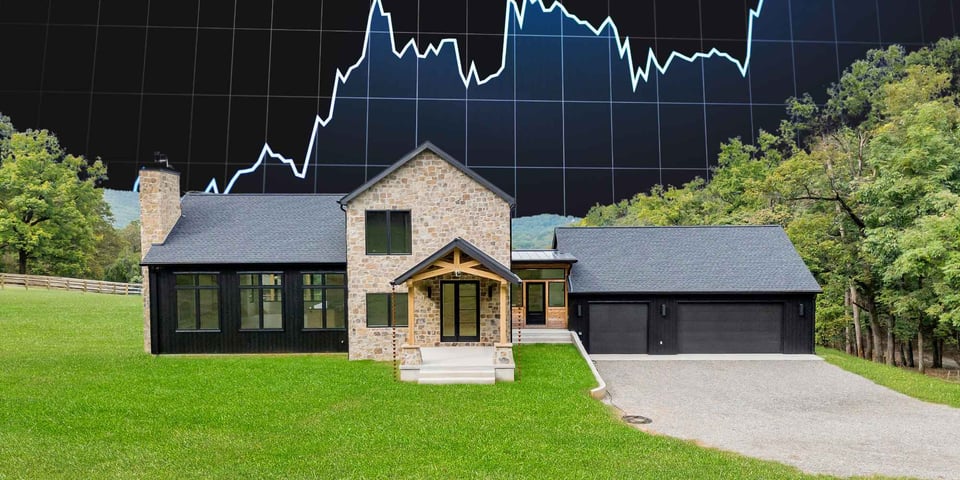
Most homeowners ask us what it costs per square foot, and while that is a fair starting point, it's not the only number that shapes the final budget. Around Roanoke and Smith Mountain Lake, the costs worth talking about early are site work, soft costs, allowances, county-specific requirements, construction loans, and more.
This guide walks through the most common unexpected costs we see on Roanoke and Smith Mountain Lake custom home projects, with realistic numbers, local regulatory context, and the questions worth asking your builder.
Table of Contents
- Hard Costs vs. Soft Costs: What Most Budgets Miss
- Site Work on Sloped and Wooded Lots
- Lakefront Building at Smith Mountain Lake: AEP, TLAC, and Shoreline Rules
- Wells, Septic, and Rural Utility Surprises
- Driveways, Access Roads, and VDOT Entrance Permits
- County-by-County Permit and Fee Differences
- Allowances and How They Quietly Inflate Your Budget
- Change Orders, Contingency, and Construction Loan Carry
- Lakefront and Mountain Design Premiums
- How to Avoid Surprises Before You Break Ground
- Frequently Asked Questions
Hard Costs vs. Soft Costs: What Most Budgets Miss
When homeowners ask what it costs to build a custom home, the answer they usually get is a per-square-foot range for hard costs: framing, roofing, mechanical systems, finishes, and labor.
In our market, mid-range custom homes typically run $375 to $475 per square foot, and luxury builds start at $475 and climb from there based on finishes and complexity.
What is often missing from that conversation is soft costs, the expenses that surround the build but never show up in lumber or drywall.
Common soft costs include:
-
Architectural and engineering fees
-
Interior design and selections
-
Surveys, topographic mapping, and geotechnical reports
-
Permits and impact fees
-
Construction loan origination and interest carry
-
Insurance during construction
-
Legal and closing fees
-
Moving, storage, and rental housing if you are not staying in your current home
For a custom home in Roanoke or at Smith Mountain Lake, soft costs typically add 10-20% to hard costs. On a $1.5 million build, that can mean $150,000 to $300,000 that doesn't appear in the headline price.
Site Work on Sloped and Wooded Lots
The Blue Ridge and Smith Mountain Lake region offers some of the most beautiful building sites in Virginia. Many of them also come with elevation changes, mature trees, and bedrock just below the topsoil. Each of those features carries a cost.
What drives site work expense:
-
Lot clearing and selective tree removal
-
Grading, cut-and-fill, and stormwater management
-
Rock excavation or blasting (common in Bedford, Botetourt, and Roanoke County)
-
Retaining walls ($20 to $60 per square foot of wall face)
-
Stepped foundations or walkout basements engineered for a slope
-
Drainage swales, French drains, and erosion control
-
Geotechnical bore samples ($800 to $2,500)
-
Land disturbance and erosion control permits (often $100 base plus $50 per acre)
On a moderately sloped Roanoke lot, site work can range from $40,000 to $80,000. On a steep mountain or lakefront lot with rock, retaining walls, and a long driveway, that number can climb past $200,000.
A geotechnical survey before design is one of the smartest investments a custom home buyer can make. It tells you what is under your future foundation, and it lets your builder price the foundation accurately instead of guessing.
Lakefront Building at Smith Mountain Lake
Smith Mountain Lake is a managed lake. Here's what homeowners often miss:
-
Dock and boathouse permits from AEP can take 30 to 90 days, sometimes longer in peak season.
-
Docks built before 2003 may be grandfathered, but modifications usually trigger a new permit and current standards.
-
The vegetation buffer rule limits how much you can clear between your home and the lake, which can affect your view corridor and your landscaping budget.
-
Riprap or seawall installation for shoreline erosion often requires its own permit and engineering.
-
Dock electrical and water service, lifts for boats and jet skis, and lighting all add cost beyond the dock structure itself.
Budget for the dock package, not just the dock. A turnkey covered dock with a lift, electrical, and water at Smith Mountain Lake commonly runs $75,000 to $250,000, depending on size, design, and shoreline conditions.
Wells, Septic, and Rural Utility Surprises
Many lots in Bedford, Franklin, and the outlying parts of Roanoke County are not on municipal water or sewer. That means a drilled well and a septic system, both of which behave differently in Blue Ridge geology than in flatter regions.
Wells:
- Standard drilled wells in the region run $8,000 to $20,000.
- Bedrock drilling can add $50 to $75 per additional foot, and low-yield wells may require storage tanks or hydrofracturing.
- Well permits run around $300.
- Water testing for bacteria, minerals, and (in some areas) radon is recommended.
Septic systems:
- Conventional gravity systems run $8,000 to $15,000.
- Where percolation tests fail, or a mound system is required, it often costs $25,000 to $45,000.
- Both Bedford County and Franklin County have adopted mandatory septic pump-out programs. Franklin County's program applies to systems within 500 feet of the 795-foot contour at Smith Mountain Lake.
- Pump-outs are required on a 5-year cycle in most cases.
Other rural utility costs:
- Propane tank install and underground line: $3,000 to $8,000
- Transformer and underground electric service extension: $5,000 to $25,000+, depending on distance
- Broadband or fiber extension where service is not yet available
Driveways, Access Roads, and VDOT Entrance Permits
A long driveway sounds romantic until you price the gravel. On mountain and lake properties, the driveway is often its own small construction project.
What goes into it:
-
VDOT entrance permit for the connection to the public road
-
Cut-and-fill grading along the route
-
Cross-drains, culverts, and erosion control
-
Base stone, surface gravel, and (for some homeowners) asphalt or concrete finishing
-
Turnarounds and parking pads
-
Re-grading and re-graveling every two to four years for gravel surfaces
A short, simple driveway might cost $10,000 to $20,000. A long mountain access road with switchbacks, culverts, and a paved finish can easily reach $80,000 to $150,000 or more.
County-by-County Permit and Fee Differences
Where your lot sits has a real impact on permitting cost and timeline. Roanoke, Bedford, Franklin, and Botetourt Counties all operate under the Virginia Uniform Statewide Building Code (USBC), but local fees, inspection schedules, and ancillary requirements vary.
A few examples worth budgeting for:
-
Building permit fees based on construction value, typically $1,500 to $5,000+ for a luxury custom home
-
Erosion and sediment control plan review and bond (Botetourt, for example, charges $100 plus $50 per disturbed acre)
-
Stormwater management permit for sites disturbing more than one acre
-
Driveway entrance permit (VDOT) for state-maintained roads
-
Health Department fees for well and septic permits
-
Mandatory septic pump-out fees once your system is in service
Working with a builder who knows each county's quirks saves weeks of permit delay, and delay is one of the most expensive surprises in custom home construction (more on that below).

Allowances and How They Inflate Your Budget
Allowances are placeholder dollar amounts in a custom home contract for selections you have not finalized yet: lighting, plumbing fixtures, flooring, tile, cabinetry hardware, and similar items.
They serve a purpose. The trouble starts when allowances are set too low to match the actual home you are building.
Example: A $20,000 lighting allowance sounds generous until you walk into a design center, fall in love with the right chandeliers and sconces for a 5,000-square-foot home, and discover the package is closer to $45,000. The $25,000 difference comes out of your budget, often with a builder markup of 15 to 25 percent layered on top of the overage.
How to protect yourself:
-
Ask your builder how allowances were set and whether they match the level of finish you actually want
-
Request real product examples for each allowance line so you can see what the number buys
-
Reconcile allowances at the design phase, not after framing is up
-
Choose a design-build firm that handles selections in-house so the design and the budget stay aligned
Change Orders, Contingency, and Construction Loan Carry
Three numbers every custom home buyer should understand:
Change Orders
Mid-project changes (moving a wall, upgrading windows, adding a feature) typically add 5 to 15 percent to a custom home budget. The earlier a change is captured, the less it costs. A change during design is cheap. The same change after framing can be ten times more expensive.
Contingency
A healthy contingency fund is 10 - 15% of the total budget. It is not a slush fund. It is a reserve for the things you cannot see until the ground is opened, the walls are framed, or the inspector flags something during a site visit.
Construction Loan Carry
This is the cost most homeowners do not feel until it shows up on a statement. A custom home in our market typically takes 12 to 18 months to design and build. Every month of a construction loan, interest is real money. On a $1.2 million construction loan at current rates, a three-month delay can cost $20,000 to $30,000 in interest carry alone, plus any extension fees the lender charges.
Lakefront and Mountain Design Premiums
Luxury homes at Smith Mountain Lake and in the Roanoke Valley share a few design features that drive cost in ways production homes do not.
-
Multi-level decks and screened porches to capture lake or mountain views
-
Large expanses of glazing, often with custom or commercial-grade windows
-
Walkout lower levels with full daylight basements
-
Outdoor kitchens, fire features, and hardscape patios
-
Smart home systems, whole-house audio, and generator backup
-
EV charging rough-ins and additional electrical capacity
-
Specialty roofing, stone, and timber detailing
How to Avoid Surprises Before You Break Ground
Most of the unexpected costs above are only unexpected because they were not discussed early. A few habits that protect your budget:
-
Invest in a real feasibility study and geotechnical work before finalizing the design
-
Reconcile allowances against actual product selections during design
-
Build a 10 to 15 percent contingency into your total project budget
-
Work with a builder who is fluent in your county's permitting and your lot's specific challenges
-
Choose a design-build team so design, pricing, and construction stay aligned from day one
-
Lock in your construction loan timeline with realistic milestones, not optimistic ones
Frequently Asked Questions
What is the true cost per square foot to build a custom home at Smith Mountain Lake?
Mid-range custom homes at Smith Mountain Lake typically run $400 to $500 per square foot, and luxury lakefront builds commonly start at $500 and climb based on site complexity, finishes, and shoreline work. These figures are for the home itself and do not include lot cost, dock packages, or extensive site work.
How much should I budget for site work on a sloped Roanoke lot?
Plan for $40,000 to $80,000 on a moderately sloped lot, and $100,000 to $200,000+ on steep terrain with rock, retaining walls, and a long driveway. A geotechnical survey early in design gives you a realistic number.
What percentage of my custom home budget should I keep as a contingency?
A 10 to 15 percent contingency is appropriate for most custom home projects in our region. Lakefront, steep slope, and historic property builds lean toward the higher end of that range.
Do I need an AEP shoreline permit to build a dock at Smith Mountain Lake?
Yes. Any dock, boathouse, riprap, seawall, or significant vegetation clearing between the 800-foot contour and the lake requires an AEP shoreline permit. Plan for a 30 to 90-day review window.
How much does it cost to drill a well in Bedford or Franklin County?
A standard drilled well runs $8,000 to $20,000. Hard bedrock conditions can add $50 to $75 per additional foot, and low-yield wells may require storage or hydrofracturing.
Are septic pump-outs mandatory at Smith Mountain Lake?
Both Bedford and Franklin Counties have adopted mandatory septic pump-out programs. Franklin County's program applies to systems within 500 feet of the 795-foot contour at the lake, with pump-outs on a 5-year cycle.
How much do change orders typically add to a custom home cost?
Change orders commonly add 5 to 15 percent to a custom home budget. The cost of a change increases the further into construction it happens, which is why design-build firms work to capture decisions during the design phase.
How does a construction delay affect my loan carry?
A three-month delay on a $1.2 million construction loan can add $20,000 to $30,000 in interest carry, plus any lender extension fees. Custom home delays compound quickly, which is why timeline discipline matters as much as budget discipline.
What questions should I ask a custom home builder before signing a contract?
Ask how allowances were set, who handles design and selections, how change orders are priced, what the contingency assumption is, what county-specific permits the project requires, and whether the builder has direct experience on lots like yours (sloped, lakefront, rural utilities, historic).

Build With Honesty and Transparency From Day One
The best custom home experience is not the one with no surprises. It is the one where the surprises happen during design, on paper, where they can be priced and decided before a single shovel hits the ground.
At Grace Alon Builders, our design-build process is built around exactly that. Architectural design, interior selections, site evaluation, and construction live under one team, so your budget, your timeline, and your home stay aligned from the first conversation to the final walkthrough.
If you are starting to think about a custom build or a major renovation in Roanoke, Smith Mountain Lake, or the surrounding communities, we would love to hear about your vision.